
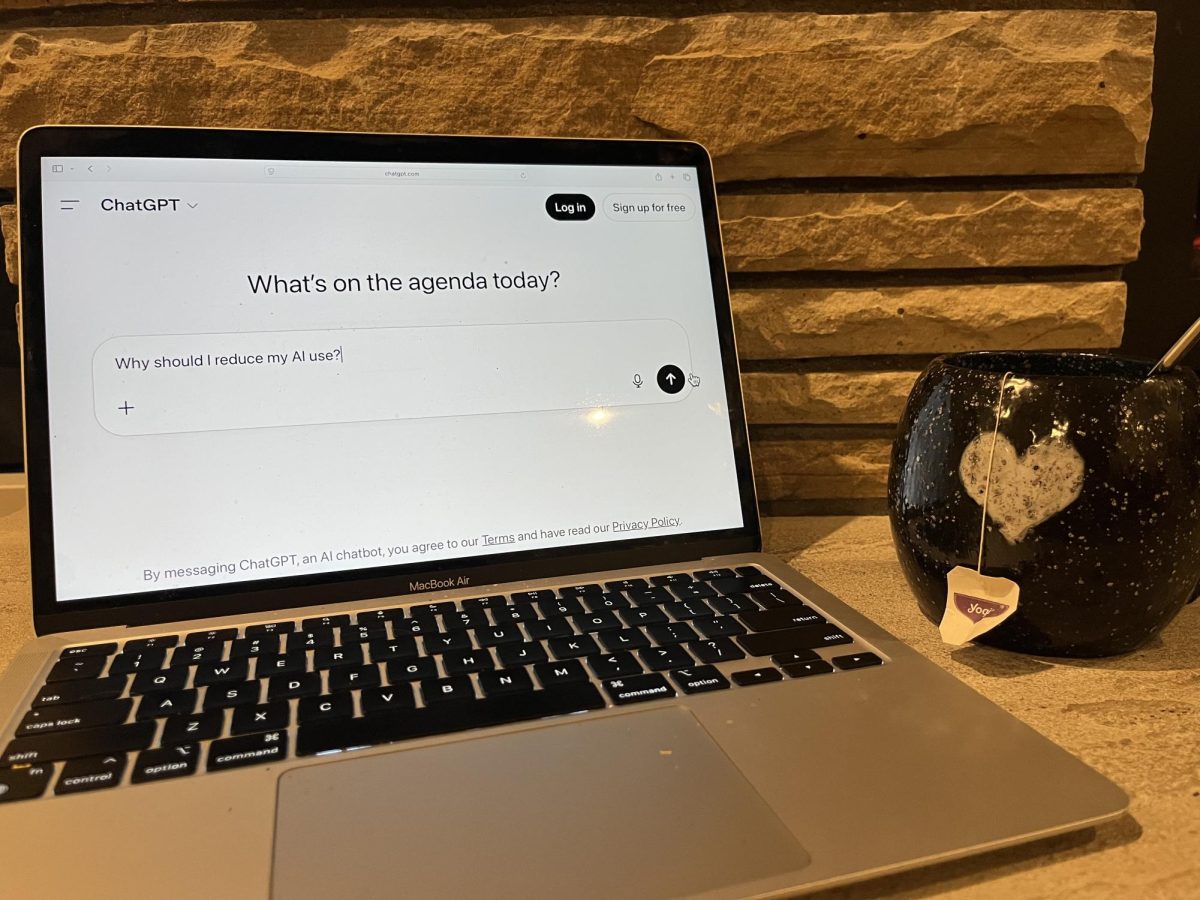
AI has blown up extensively since the launch of ChatGPT in 2022. AI quickly became a dominating force in many fields of life, from the job market to even BHS’s academics. When polled, 122 respondents within Boulder High School reported that 74.7% of students use AI once or twice a month or more, 50.9% use AI once or twice per week or more, 32% use AI multiple times per week or more, and 14.8% use AI every day. But what is the impact of so much AI use, and is that impact for better or worse?
First, what is the impact of AI on the environment? AI has intense demands and, therefore, repercussions on many aspects of the environment. In order to train and develop these AI models, a massive amount of electricity is required, up to seven or eight times the normal computing workload. In fact, in 2026, the global electrical demand for data centers is expected to jump from 460 terawatt-hours in 2022 to 1,050 terawatt-hours. This expected consumption places data centers as the 5th largest electricity consumer worldwide, between Japan and Russia.
This leads to increased carbon dioxide emissions (in order to create the electricity) and pressure on the electrical grid. For example, training a single model requires 1,287 megawatt-hours of electricity (enough to power around 120 U.S. homes) and generates about 552 tons of carbon dioxide. Now, multiply that 552 tons by 2 million, which represents only the public AIs created in 2025. This massive electrical demand is unsustainable, especially when centers rely primarily on millions of tons of fossil fuels to generate the electricity required.
AI also requires an incredible amount of water to act as a coolant. The energy that the hardware needs for training, deploying, and fine-tuning the AI models gets the centers incredibly hot, which then pulls water from the local water supplies to cool down. After the water is used, 80-70% of the water then evaporates into the atmosphere, leaving the local waterways drained and empty.
The current estimate is that for each kilowatt hour of energy a data center consumes, it requires two liters of water. As an estimate for 2026, that means 2,100,000,000,000 (two trillion, one hundred billion) liters of water are being used just to cool these data centers. For reference, New York uses 1.38 trillion liters of water in an entire year.
Secondly, AI has a profound impact on critical thinking. Muscles get stronger by being put under strain, which tears the muscle fibers. The muscles then repair and grow stronger, able to withstand that same strain without tearing. Just like muscles, human brains grow smarter and learn more when put under new strains and presented with new information to learn.
AI provides an easy shortcut to this strain. Instead of learning to write an essay or reading a challenging book, AI can quickly do both for you. In doing so, however, the opportunity to grow smarter and become more accomplished academically is shattered. AI is exactly like going to the gym and lifting styrofoam weights to get “stronger.” When you use AI to complete work without reading through it, processing the information, or attempting to learn, you do not absorb information and do not become any smarter.
AI can also harm creativity. AI, by itself, is not creative. It cannot originate ideas or images, nor invent stories without human prompting. Instead, AI systems absorb massive amounts of existing online information and use algorithms to predict the most suitable result. In the end, AI doesn’t generate new ideas—it only remixes previous ones. When people use AI for “creativity”, AI can undermine genuine human imagination by substituting real innovation with recycled content.
All of this negativity to say: AI, to its core, is not fundamentally bad. AI is simply a tool that is incredibly good at predicting the next most likely word after scanning through our entire vast internet. This is an incredible technology, one that can help in research, data formatting, streamlining processes, mistake-proofing, and help humans create so many amazing things.
As an example, AI has already been extremely helpful in the medical field. AI can predict and quickly diagnose diseases, rare and common, and sometimes more reliably than a doctor. The application of this can bring accurate, cheap healthcare to so many people globally.
AI has the potential to help people accomplish so many amazing things. Nuclear research has that same potential, and also brought about the development of the nuclear bomb. Ships brought that same potential, and also brought Columbus and all of the European diseases that decimated the Native Americans who were originally living in the Americas. Bronze had that potential, and our ancestors used it to create swords and bring warfare.
The point is, AI is a tool. It can offer many benefits, but it also presents risks to us, our environment, and the world as a whole. You may need to learn how to use AI effectively and in a beneficial way for the future, especially as you join the job market. But still, it’s important to remain mindful. The next time you decide to “ask Chat!” for a simple question, homework assignment, or just for fun, consider both the environmental impact and how it might affect your critical thinking. Think about whether relying on this tool is the kind of lasting impact you hope to make on our only Earth.