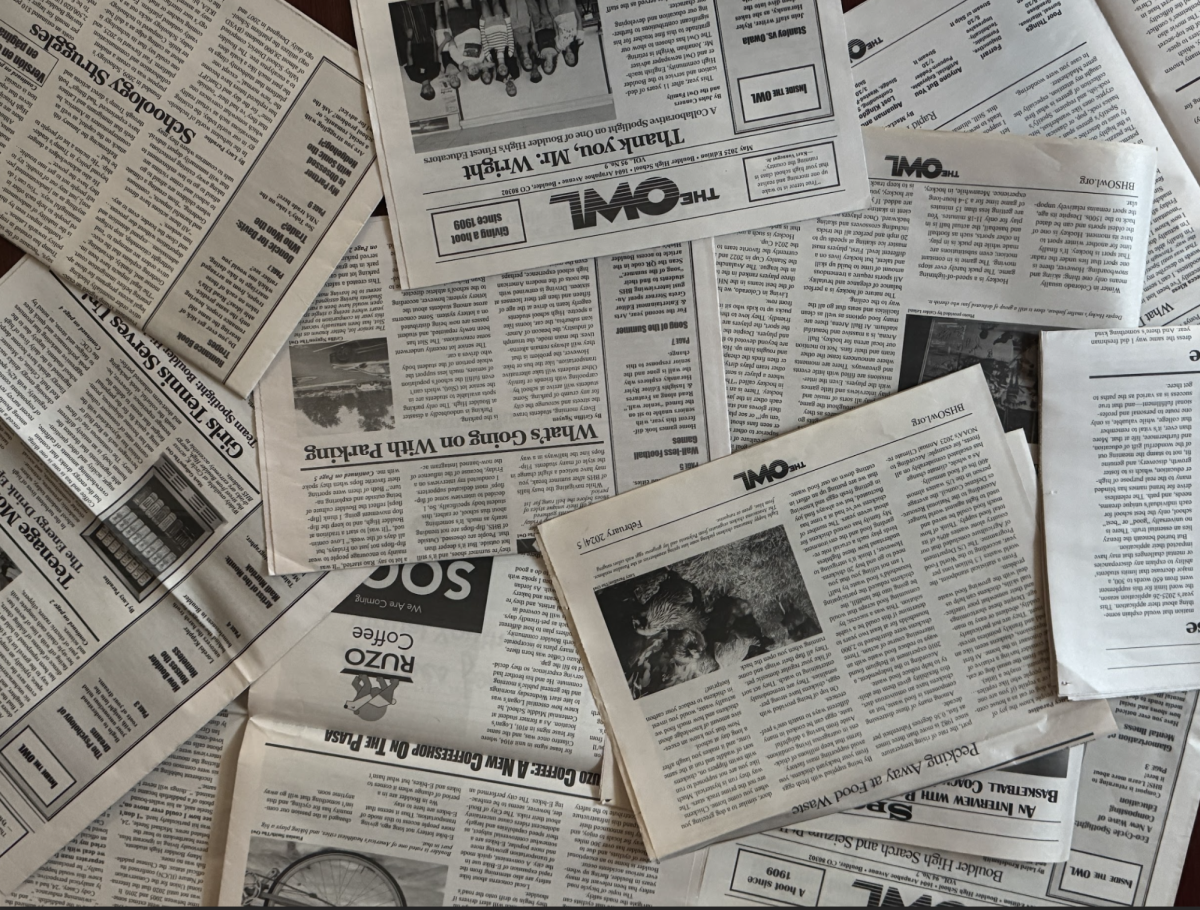
Chances are, if you’re reading this, you either begrudgingly took a copy of The Owl from one of our staff members or excitedly grabbed it because you genuinely wanted to know what was inside for that month’s edition. Each month, between 8:15 and 8:30, you’ll see two to four of us standing at the door handing out copies to the early birds, the people rushing in right before the bell, and everyone in between. What started as The Prep Owl in 1909 is now simply The Owl, Boulder High’s student-run newspaper, and if you’re reading it, you’re already part of the reason it still matters.
If you are holding this paper right now, you already have something in common with the staff: you care enough to pause and pay attention. Being part of The Owl helps you refine your writing, develop real‑world skills, and stay connected to what is happening in your school, community, or even the world. It is not about extra homework or resumé building, but about curiosity and learning diverse ways to write—from everyday stories to investigative journalism. These skills stay with you long after you leave the classroom.
For starters, writing for The Owl gives you a chance to sharpen your writing in a way most English assignments don’t. Instead of writing only what a prompt asks, you get to choose topics that actually matter to you: school events, student opinions, sports, or issues that affect your community and beyond. Typically, you have about two weeks to write and revise each article, so there is time to think, cut out fluff, and shape your ideas into something ideally quite solid before your editors even glance at your work. Getting feedback from editors and our advisor helps you see how a sentence can be clearer, shorter, or more convincing. That kind of practice builds confidence, strengthens your writing across subjects, and helps you to communicate more effectively in and outside of school.
Being part of the paper also connects you with people you might never talk to otherwise. You can walk into club meetings, games, school events, and other events around the community that you otherwise would not normally be involved in. You will learn how to ask questions, listen carefully, and represent others’ voices accurately. That experience helps you become more comfortable talking to strangers, more curious about your school, and more involved in the community around you. Instead of just seeing what is happening from the sidelines, you get to help shape how it is shared, whether through a feature story, a quick interview, or a deeper investigation.
At the same time, joining The Owl is a low‑pressure way to finish your day. It is a space where you can hang out with friends, brainstorm story ideas, edit a piece, or help plan the layout, all while still doing something productive. You get to build a wide range of crucial skills, earn LA credits, and after a year on staff, you could even become an editor. Editors work on layouts in Adobe InDesign for their respective sections. That mix of writing, editing, design, and meeting deadlines shows the kind of versatility many jobs and recruiters look for. It feels like a different kind of class, one that runs on your own interests, your own questions, and your own voice.
And all those issues, opinions, or people who don’t always get heard that you care about? The paper gives you a platform to amplify them. You can write opinion pieces that matter to you, report on under‑covered issues, or help share stories that go beyond the usual headlines. That’s where school journalism becomes more than just a class. It becomes a way to advocate, to lead, and to learn how to communicate with clarity and purpose.
If you are reading this, you are already one of the people who pause long enough to care what is in the paper. That mindset is exactly what The Owl needs. So why not bring that same curiosity onto the staff? Joining does not require you to be perfect. It just asks you to show up, try, and be part of the story of your school. In the end, The Owl is not just a newspaper. It is a place where students can read, ask questions, create, and find their own voice.