With Gen-Z being famous for its progressive views and authentic self-expression, one would think it would be among the more creative generations. Despite this, with rising technology, increased academic pressure, and declining mental health, the ability to be creative only seems to be declining.
In fact, the American Psychology Association states that, based on the Torrance Test of Creative Thinking, creativity levels in both kids and adults have been decreasing since 1990. However, this study hasn’t been updated since 2008, so I wanted another perspective on the issue: One of Boulder High School’s Draw/Paint teachers, Mrs. Kotlinski. Upon being asked if she had noticed any changes in creativity levels over the years, her response aligned with the study’s findings: “Yes. Just seeing how creative my peers were in high school, there was definitely a more DIY scene of ‘let’s come up with creative, unique new things, new ideas,’…I do see students struggle a lot with coming up with new ideas and with critical thinking, and I think a lot of it might be because of schooling—because they’re used to teachers telling them exactly what to do.”
It’s hard to pinpoint the cause behind this decrease in creativity, but when asked about her view on the issue, Kotlinski explained that she thinks the 3 main obstacles stopping people from being creative today are time, self-confidence, and mental health. “Everyone has so much stuff going on,” she explained. “We don’t have a lot of downtime anymore, even as teenagers. Adults definitely don’t, but I feel like students don’t have as much free time as kids used to in the past. So definitely not enough time to be bored or explore something new.” Considering how academically motivated so many BHS students are, it seems realistic that many of us would prioritize grades over creative hobbies—maybe too much so. As for the mental health aspect, the teacher shared, “It’s sad because creativity helps with that, but it can be a hurdle.”
What Kotlinski emphasized the most out of these issues, however, was self-confidence, which she believes to be, in large part, due to rising social media use. She elaborated on the issue, stating, “Social media, I think, really diminishes people’s confidence. It makes them feel like they’re not good enough or like all the ideas have already been done, which is really sad because, yes, a lot of things have been done, but they haven’t been done by you or by your voice or your perspective.” Harvard professor and pediatrician, Michael Rich, seems to agree with the sentiment. Discussing the impact of screen time on the brain, he explains, “Boredom is the space in which creativity and imagination happen.” With over half of teens having an average daily screentime of at least four hours according to The National Center for Health Statistics, phones leave little time for youth today to let their minds wander, in turn, leaving little room for the generation of new ideas.
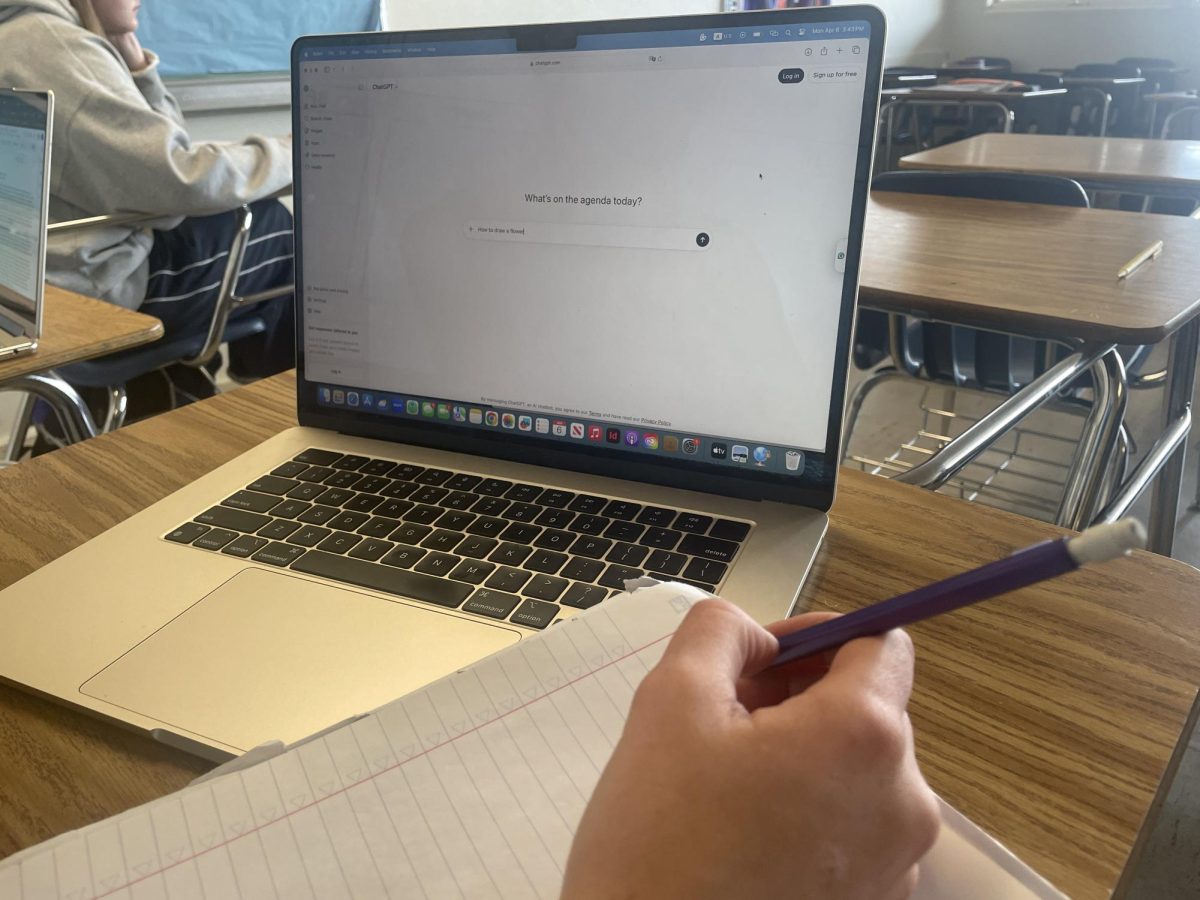
Considering the turning point of this creative decline occurred in the 90s, it’s safe to assume that technology plays a significant role in the decreasing creativity that has been observed among teens. However, social media isn’t the only new technology that may be impacting the brains of teens. Just over the past few years, AI has gone through immense changes, of which Kotlinski shared her opinion in our interview: “I think people are using it as a crutch when it really should be a tool. I’m not opposed to AI. I think students can use it to help with brainstorming and helping as a tool to inform their ideas, but some students have been using AI as a crutch, as in putting a prompt into AI and making exactly what AI is telling them to do. It’s honestly really sad because AI is not really informed by creative-thinking people—it’s informed by more rigid, conservative people, so you’re not gonna get amazing results from creativity with AI.” As AI is developing to have more creative potential, human dependence on it becomes increasingly worrying. Although using AI for creative ideas can be accessible and convenient, it takes away from the invaluable practice of improving one’s ability to think creatively. Kotlinski compared this skill to a “muscle you have to train,” explaining, “the more you do it, the better you get.”
Because of this, it’s immensely important to prioritize creativity whenever possible. In search of advice, I asked Mrs. Kotlinski about her tips for those looking to balance creative hobbies with day-to-day responsibilities. She responded, “My biggest advice is to remember that it’s worthwhile…The time you spend being creative, whatever it is, is 100% worth your time, and I think that the hardest hurdle as you get into adulthood is thinking it’s not worth your time, because time becomes a really sacred resource. So ensure that you have that idea instilled in you that it is meaningful and it is worth your time, that you are gaining something from it, and the world is gaining something from it. My other tip is, don’t beat yourself up if you’re going through phases when you’re not doing anything. It doesn’t have to be every day, it doesn’t have to be every week. It can ebb and flow. In my life, I’m an artist, but I’m also a mother and a teacher and a wife and all of those things, so my creative practice personally ebbs and flows. That’s natural and normal, and you can pick it back up again.”
The American Psychological Association also provided some advice on prioritizing creativity in their 2024 article, The Science Behind Creativity. The author, Kiersten Wier, had a few suggestions for improving one’s creativity, but at the top of the list was simply, “put in the work.” Weir elaborates, “People often think of creativity as a bolt of inspiration, like a lightbulb clicking on. But being creative in a particular domain—whether in the arts, in your work, or in your day-to-day life—is a skill. Carve out time to learn and practice.”
In addition to creativity being immensely necessary to society, being creative is known to reduce stress and lift psychological burdens, according to the National Library of Medicine. So put down that phone, and pick up a sketchbook, pen, or camera—whichever way you choose to exercise your creativity, your mind will thank you later, even if it’s just for a few minutes.