
Although it may be hard to imagine a member of Green Day, The Who, or Radiohead walking the halls of Boulder High, in reality, many of those stadium-selling legends formed as garage bands in schools like ours.
To me, however, it seemed that these bands were a thing of the past. High school bands felt more like relics from John Hughes movies and the 2000s than a modern-day reality.
Thank god I decided to try and prove myself wrong.
Through Instagram deep-dives and underground punk shows, I found nearly a dozen bands at Boulder High spanning genres from death metal and indie pop to folk rock and emo-inspired punk. This month, I had the chance to sit down with three of them – TOAD, Landfill, and Anthrapology – and uncover the best-kept secrets of the high school music scene.
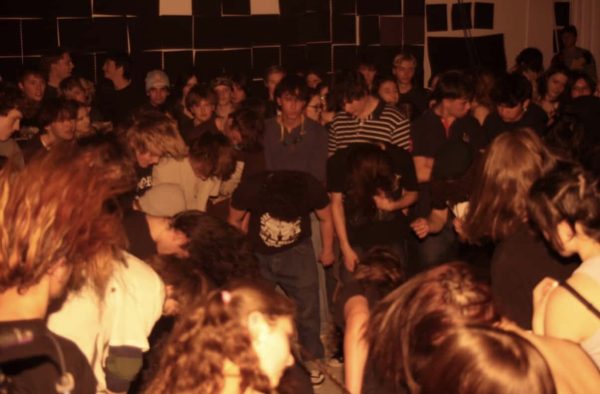
The first band I discovered was a folk rock group going by the name of TOAD. The four members of TOAD, Arthur Padraig, ‘26, Oliver Evans, ‘26, Dre Carrasquillo, ‘26, and recently graduated alumni Tessa Nims, met at an environmental lobby day at the Capitol. Upon discovering their shared love of Creedence Clearwater Revival’s “Have You Ever Seen the Rain?” the group decided to get together and record their own cover. The Creedence cover started a landslide of music-making for the four, and TOAD was born.
Each member of the group brings their own unique taste and inspirations to the band, making TOAD into what Padraig, who plays electric and acoustic guitar, describes as a “melting pot” of genres and sounds. Padraig, who also plays in a metal band, likes to “bring the rock to the folk-rock” of TOAD, inspiring Guns N’ Roses and Bob Dylan covers. Evans, the band’s drummer and main lyricist, cites The Decemberists and murder-folk band Amigo the Devil as his influences, while Nims, the lead singer, cites Bonnie Raitt, and Carrasquillo, who plays bass, mentions Metallica and the indie rock band Manwolves as his biggest inspirations.
Overall, the band’s sound is rootsy rock, reminiscent of Americana bands such as The Eagles and Bob Seger. Their original song, “Zayante,” is a highly melodic mix of rock and folk that is such a fun listen and introduction to the creativity and talent of the band.
“One of the biggest things that we like to do, especially with ‘Zayante’,” says Carrasquillo, “is surprise the audience.” The band plays with tempo and dynamics throughout the song, building momentum to interspersing melodies and bridges, making it a thoroughly enjoyable and danceable experience. “It’s a rollercoaster,” says Carrasquillo, “you don’t know what you’re getting.”
TOAD carries themes of environmental activism throughout their music and lyrics, tangible in their covers of Buffalo Springfield and Neil Young as well as their originals. In fact, the day after I interviewed the band, I ran into Evans at a protest, where he was playing tuba in time to chants and hyping up the crowd with “We’re Not Gonna Take It,” demonstrating the members’ focus on activism.
“Along with the environmental themes,” says Evans, leaving the audience with a “sense of hope” through their music is important. “Wherever life takes us,” says Carrasquillo, “we want to give back the same inspiration that we got from the world.”
As for the future of TOAD, talks of upcoming music are in the works. “I think, this is out there, but… we might be able to crank out enough stuff to make an EP,” Padraig says hopefully. Evans, the band’s resident optimist, immediately follows with an emphatic, “We could make an album.” “An album?!” shouts Padraig, but Evans is undeterred.
Clearly, there is a bright future ahead for TOAD and their music. Their passion for music is contagious, and I, for one, will certainly be on the lookout for an EP (or, if Evans gets his way, an album!) to be titled Toadkill or Toad Trip, and hope to see TOAD live at a venue this spring.
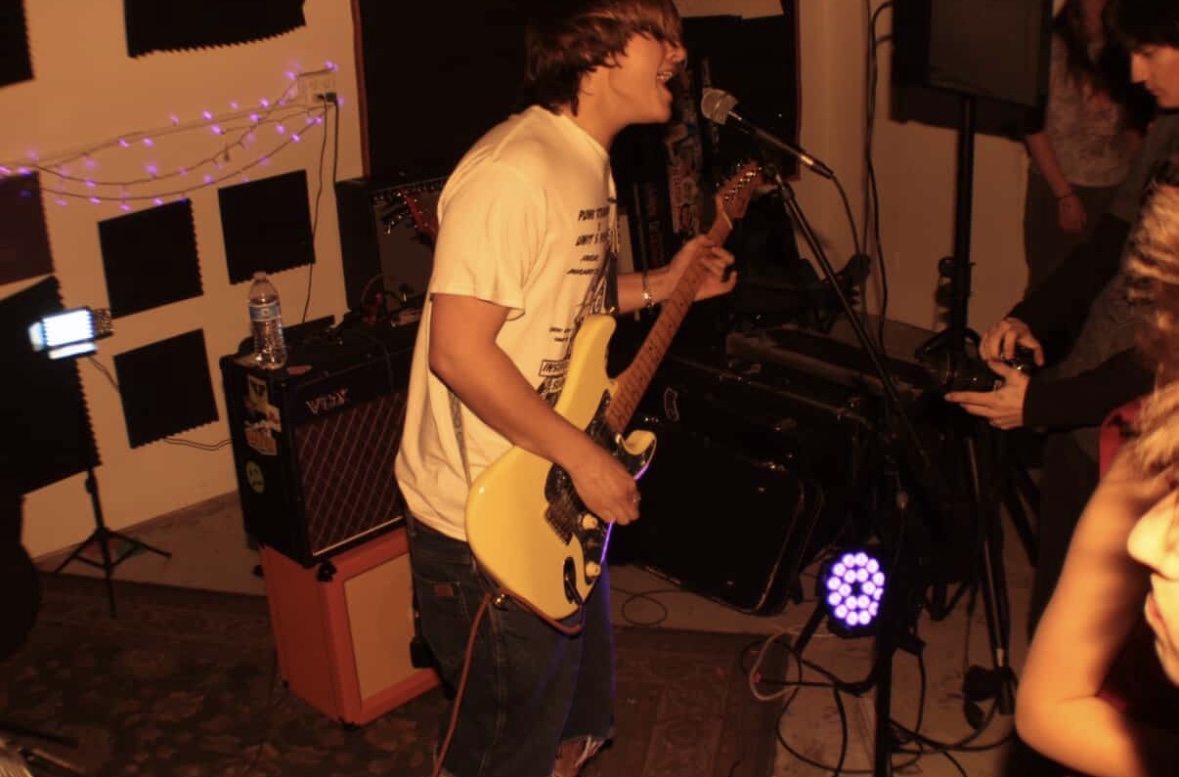
The second band I had the pleasure of speaking with was Landfill, the brainchild project of Liam Telleen, ‘26, Benjamin Hovermale, ‘26, Caelan Mizuno, ‘26, and Finnegan Pearson, ‘26. Like TOAD, the members of Landfill all bring their unique tastes and musical styles to the band: where Mizuno and Pearson, who play bass and drums, respectively, have a background in jazzy, funky music through Boulder High, Hovermale (the band’s vocalist) adores rap and Telleen (lead guitarist) is more into heavy metal. As a band, the group is inspired by the 80s and 90s punk scene, as well as early 2000s metal and alternative rock.
Their sound as a band is head-banging punk, with some heavy riffs and snarky lyrics. Mizuno and Telleen say the band is heavily influenced by political themes but try to keep the energy positive: they are simultaneously working on a protest anthem about ICE, and a fun song titled “Snakepit.”
Though only one recording is posted on the band’s Instagram, all together they have more than a dozen originals recorded. The band promises to release their upcoming EP, “STD Aquarium,” after they finish recording and polishing one last song. Until then, says Mizuno, fans will just have to come see the band perform live. “Go to punk shows!” cheers Mizuno, “Get out in the local scene!”
At a Landfill show, Telleen says, “expect to have fun!” The band’s comedic bits mixed with their highly danceable (and moshable!) music makes for an incredible live performance, and Landfill currently has several upcoming shows this spring, including a house show with Anthrapology and “as many gigs as possible” at underground spaces such as D3 Arts and, hopefully, Seventh Circle Music Collective in Denver.
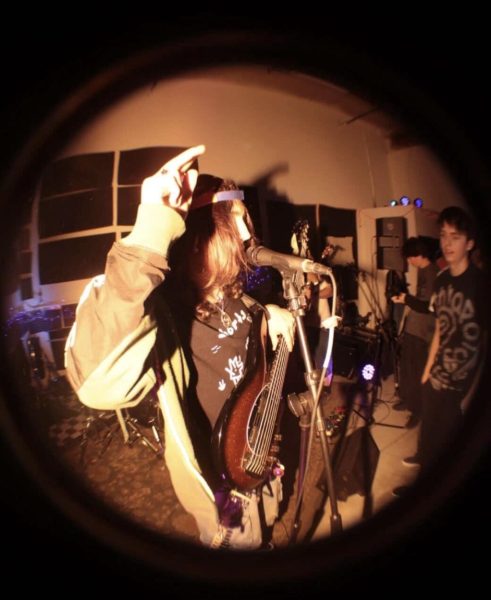
The last band I was able to interview (this month) was the incredible Anthrapology, the emo-inspired punk trio of Carter Croasdale, ‘26, Elden Graham, ‘26, and Levi Hedgepeth, Fairview alum. The three, who have been friends for years and initially met through School of Rock, formed the up-and-coming band a few months ago, “after that shooting threat that happened at Fairview in September, [when] we decided that we really wanted to make some punk music,” according to Hedgepeth. With their individual musical backgrounds and shared love for bands such as Titlefight, Modern Baseball, and Jank, however, the band quickly adopted a more emo punk style. When I had the chance to interview them, it was thirty minutes before their 8:00pm set at Unit 5 in Boulder, a warehouse-style venue that was soon filled beyond capacity with concertgoers looking to hear them play.
“The first time we played together was here,” Graham thinks back to a few months ago, when a band bailed on Unit 5 and Anthrapology had the chance to spontaneously play a couple songs, their first appearance as a band.
“We’re so stoked to be back here and actually playing,” says Croasdale.
“Especially with Shorts, that’s such a dream,” adds Graham, mentioning one of the other bands playing the sold-out venue the same night.
“These are all the bands in the scene that you look up to,” says Croasdale. When I mentioned that Anthrapology is one of those bands now, Croasdale responds, “I hope so, I mean, we’re getting there. This is the first step.” A pretty impressive first step for an underground high school punk band, garnering such a large crowd on their third live performance as a band.
The name Anthrapology, Hedgepeth tells me, comes from a Charlie Parker song. “Also, anthropology is the study of people, but we spell it in a different way.”
“I really like that name, because… especially with the music we make, it’s studying our own selves and people around us,” says Hedgepeth. Taking inspiration from punk bands of the early 2000s and 2010s, all members cite Modern Baseball and Jank as some of their favorite artists, even joking about identifying as a Modern Baseball cover band, despite having multiple fully recorded original demos (which I encouraged them to drop).
Graham, the band’s lead guitarist, says emo music is “all I’ve ever played, and all I’ve ever wanted to play.” He mentions looking up to Joe Reinhart and classic emo bands of the 2000s, but the band also takes inspiration from their peer bands and the modern emo, punk, and rock artists they play with. Graham admits, “all the riffs I’ve written recently, it’s just because I listen to Shorts,” one of the co-starring bands that played with Anthrapology that evening. “And I’m very grateful for that!” jokes Hedgepeth.
Croasdale, who has been drumming “unofficially” with a separate band, ok i love you, since the fifth grade, cites Titlefight and Tiger’s Jaw as his biggest musical influences. And while Hedgepeth takes inspiration from R’n’B artists like James Jamerson as a bass player, Anthrapology is the first band he has also done vocals in.
All members of the band sing vocals during the set, and each mention bringing riffs, lyrics, or ideas to the band, contributing to a collaborative songwriting form where each artist has an equal part in creating and playing their music.
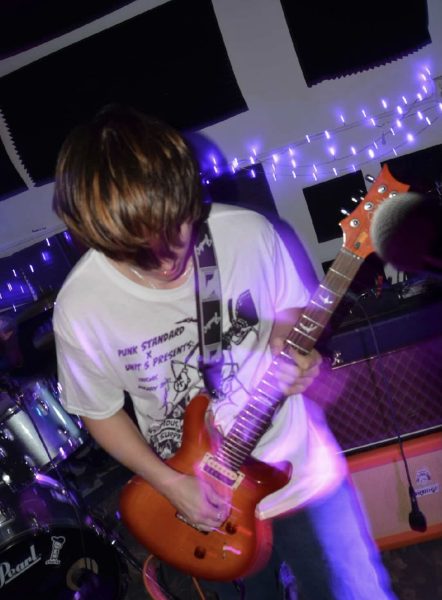
Though Graham jokes their music is just “all about girls,” it seems to have drawn a broad audience of moshers and crowd-surfers to their Friday night show. Their performance was fun, heavy, and, best of all, loud, harkening back to the punk scene of the 90s. Anthrapology is sure to be a favorite band for any punk, emo, or rock fan, and if you have an in with the punk scene, their Friday night performances can’t be beat.
Ultimately, I am inspired by the future of Boulder High’s bands and artists. High schoolers have the unique opportunity to see bands play live in their beginning stages, before they make it big. As evidenced by bands such as Geese and Greta van Fleet, who formed in high schools across the nation, or even 30H!3, which was formed by a Boulder High alum, it really is possible that these Friday night high school punk shows may produce full-time, radio-play artists. I encourage any music lover to try and experience more of the high school music scene while the tickets are cheap and venues are small, for the chance to become an original fan of a big band and the guaranteed fun of a house show or late-night concert.