The spike in popularity of true crime can be attributed to a multitude of factors, such as psychological changes in the population and new media formats. However, many people don’t realize that the true crime audience is largely female. We can speculate endlessly about what draws women to stories of crime and violence. Maybe it’s awareness, to know how to handle an attacker. Maybe it’s morbid fascination, with a brutality so unexplainable. Or perhaps, it’s just simple boredom, to escape the repetition of everyday life.
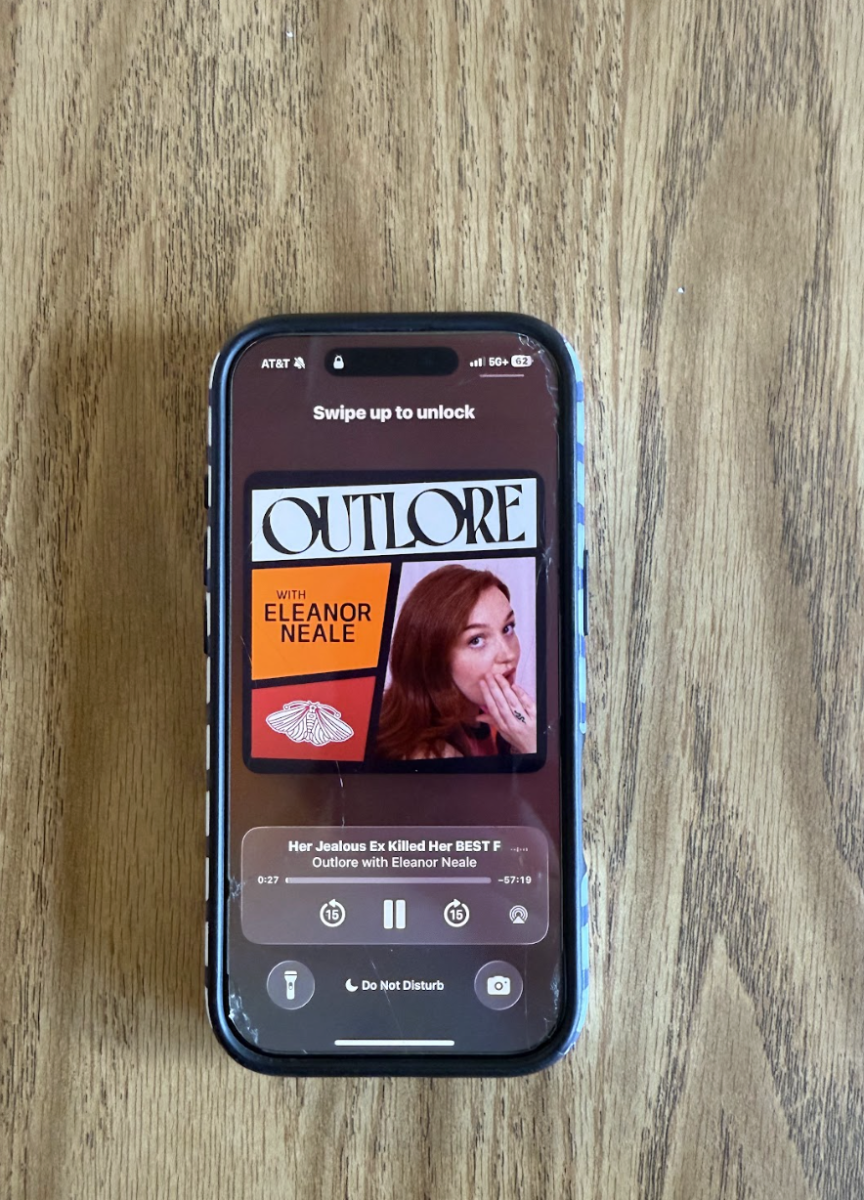
During lockdown, I started listening to true crime podcasts. I’d fold laundry while absorbing gruesome stories about women—teenagers even, like myself—having their lives stolen. I’d be driving to the grocery store as a British YouTuber described the murder of a mother with four children by her husband. The deeper I went, the more desensitized I became to the violence. I started predicting the ending of the “story” like a mystery novel rather than real life. Now, I’m able to recognize this way of thinking as harmful, but back then, I would’ve shrugged it off.
While in this absorption of crime, I began to notice a troubling pattern: women’s voices were missing. Their stories might be told by women, or consumed by women, but the actual victims remained the quietest of all. Many expressed their fear while alive, but in most cases, they were only listened to after tragedy, and justice was delayed for years, even decades. There were gaps in the cases. Over and over, the suspects were men hiding in plain sight. The husband, the friend, the father. I kept asking myself what would have been different if women had been listened to earlier.
One case that stood out to me was the death of Jane Clough, a woman who predicted her own murder. She was stalked and ultimately killed by her boyfriend, Jonathan Vass. The court heard that Clough had kept a diary detailing her abuse and fears of what Vass might do. She and her family had been “rocked and devastated” when he was bailed on rape charges, leaving her “extremely concerned for her safety”. She documented everything meticulously, but was ignored until it was too late.
This is not meant to dismiss male or nonbinary victims, but there is a significant relationship between the audience and the story. As women consuming these narratives, we must confront our own role in turning tragedy into spectacle. Too often, we pay attention only once the victim is dead, and she has no agency in her own narrative. Even in fictional crime movies, there’s a certain aspect of women being victims, like objects of intrigue. We analyze their “choices,” speculate on what they could have done differently, and ultimately consume their suffering as entertainment.
The 2020 film Nope, directed by Jordan Peele, perfectly captures the concept of treating something as a spectacle to be watched and looked at but never understood. In Nope, the main characters learn of an extraterrestrial creature hiding in the clouds. Almost everyone treats the creature as a fascinating freak of nature, staring at it, but never truly understanding it. This is parallel to the way the public treats murder victims, as a speculative story to base decisions off of and judge for not choosing the right “actions”.
Listening to these stories made me reflect on the importance of truly listening, before tragedy, not just after. It made me question how we, as a society, treat women’s voices and fears. How many lives could be saved if we just paid attention earlier? I’ve restructured the way I listen to true crime, with more grace, and question what the consequences are when I ignore all perspectives.