
Watermelon Woman
This genre-bending 1996 film is directed by Cheryl Dunye, who also stars as the main character. It falls somewhere between a comedy, drama, and romance, and in addition to being in the minority of movies in which its jokes consistently land, it is also incredibly thought-provoking.
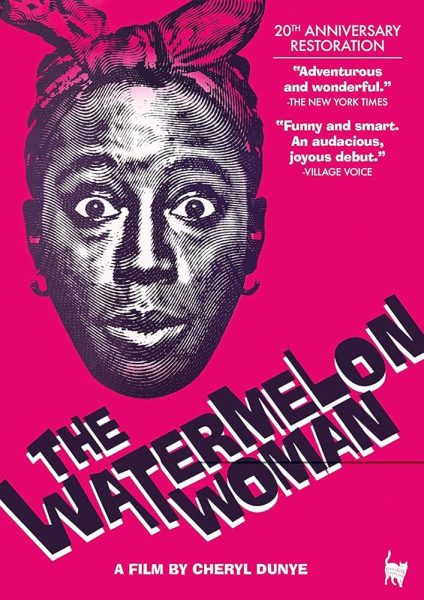
The Watermelon Woman follows a young Black lesbian named the director, who works at a video rental store with her best friend in Philadelphia. This is where she meets Diana, a White customer who eventually becomes her love interest. As the romance between the two develops, so does Cheryl’s research into a fictional African American actress and singer from the 1920s. She acted in the Plantation Memories, a movie in which, not only was the actress uncredited, but her character was given no name besides “The Watermelon Woman” in the end credits. Cheryl eventually learns that this actress’s name is Fae Richards, and upon further digging, learns she was a lesbian who, like her, dated a white woman.
As she continues digging into Richards’ life to make a documentary, what she learns about the actress mirrors her own life and relationship. Through this, Dunye explores the struggle of making yourself heard as a Black lesbian in the movie industry, in addition to considering the issues that can exist within interracial relationships, particularly regarding those between two women.
The relationship between Cheryl and Diana is cute—despite its implied issues— but it’s not the main attraction of the movie. What makes Watermelon Woman worth watching is its thought-provoking cultural commentary that would still be considered groundbreaking if it came out today
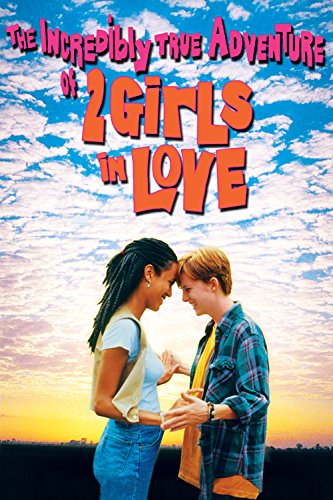
The Incredibly True Adventure of Two Girls In Love
Next up is one of our personal favorites: The Incredibly True Story of Two Girls in Love. This is a 1995 romance with coming-of-age themes, produced by Maria Maggenti. It follows the story of an artsy lesbian outcast, Randy, who unexpectedly forms a bond with her polar opposite, Evie. Evie is everything Randy isn’t: Popular, affluent, bookish, and closeted. Their unlikely friendship soon blossoms into a natural and beautiful portrayal of romance between the two. This couldn’t have been done without the movie’s two stars, Laurel Holloman and Nicole Ari Parker, who bring their characters to life with their realistic acting and phenomenal chemistry.
The only downside of the movie is that it can be somewhat cheesy at times, but this is overshadowed by the many positive aspects it contains; Its realistic characters, heart-warming romance, and sense of humor are just a few of the things that we liked about it.
Although the romantic aspect is the primary focus of the film, it also skillfully explores themes of family, homophobia, and identity, making the movie well-rounded enough for those who are bored by straight-up love stories. The Incredibly True Adventure of Two Girls in Love is an emotionally well-rounded but primarily feel-good film that Maggenti clearly put her whole heart into, with a satisfying ending that leaves its audience smiling ear-to-ear.
Crush
If you’re in need of a lighthearted and funny romcom to turn your brain off this weekend, look no further.
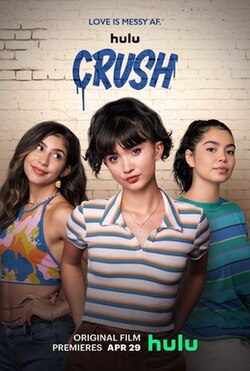
Crush features an artsy high school loser, Paige Evans, in a more modern high school romance than the previous two movies, and was released by Sammi Cohen in 2022.
In stereotypical fashion, Paige has been hopelessly pining over her classmate, Gabriela, for years. When senior year comes around, she ends up joining her school’s track team in hopes of getting closer to Gabriela, but she falls for an unexpected teammate instead.
If the idea of watching a love triangle ensue for the entire duration of a movie makes you wince, don’t worry—I’m right there with you. However, the love triangle in Crush ended up being, surprisingly, much more enjoyable than groan-inducing. Something interesting about this movie is that there is almost no mention of homophobia, as the plot focuses more on the romantic and comedic aspects than the sexual identities of the characters. Although it’s undoubtedly important to cover serious topics such as homophobia, this was a pleasant contrast to most other movies featuring a queer romance, and adds to the movie’s lighthearted nature.
Crush’s dialogue can be a bit cringy at times, and its message isn’t by any means groundbreaking. Nonetheless, it’s entertaining, cute, and earned a few laughs from us, making it the perfect flick for a teen who’s too burnt out from schoolwork to spend energy on heavier, more thought-provoking media.