
The components that make up our humanity are presented in every situation we live through. These deep-rooted traits make us empathetic; they make us care for those around us and for their welfare, even when doing so doesn’t benefit us. Creating connections based on these foundational principles is beautiful, and a lack of compassion can be detrimental. This compassion has led us to our most unified extremum in human history. Still, humans often lack the agency to care. This attitude toward our lives has never made us lonelier.
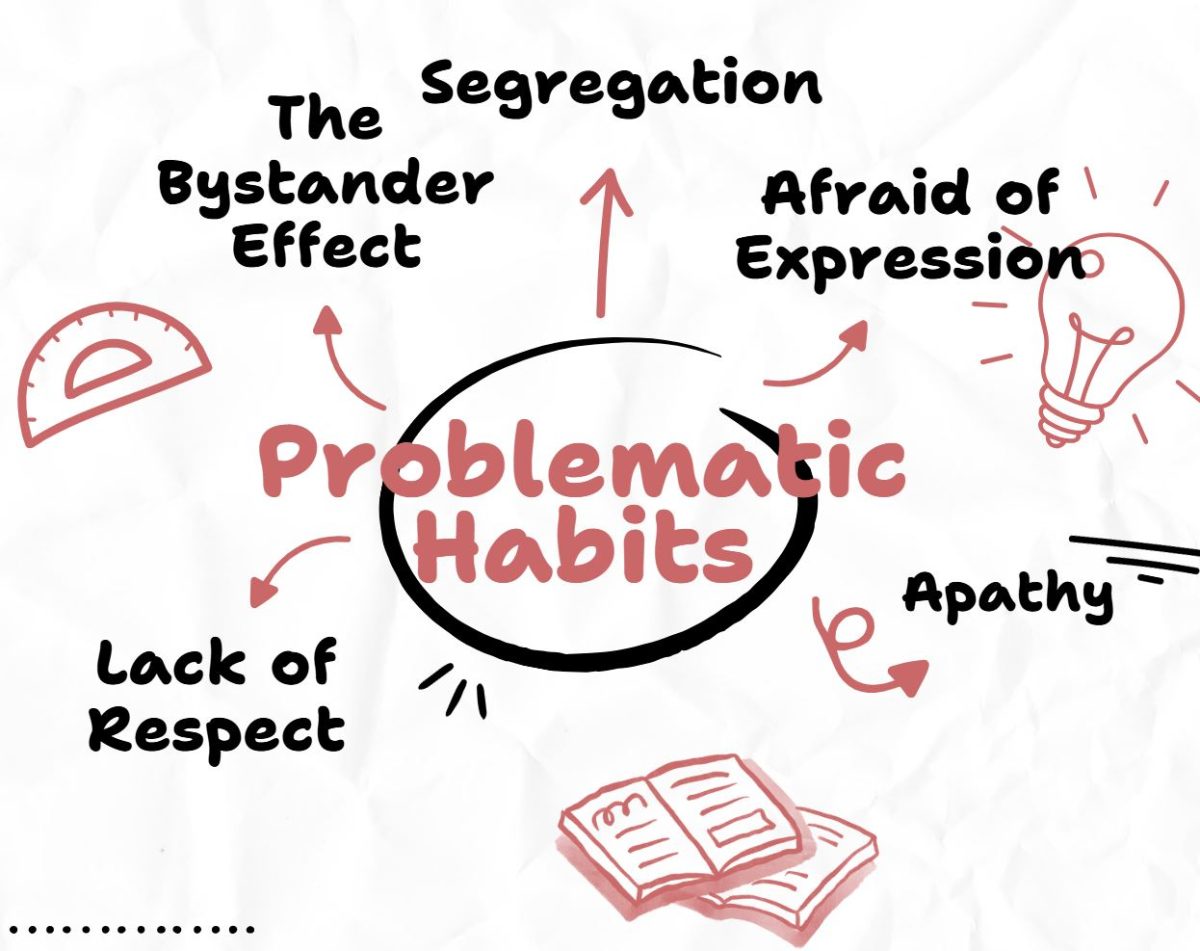
Our inability to regulate our technology use is at fault. Quick dopamine hits plunder our potential to expand our external and internal qualities. The need for inner validation from people whose opinions we don’t really care about is distorting our perception of reality. Many people have identified these problematic habits the same way I have, here and outside of school, through predictable observations of one another. But only you can assess yourself and choose to change on your own accord. Remember to navigate away from the following points when you do:
The Bystander Effect: Most students won’t take the initiative to help someone if the opportunity presents itself. Those around us influence our behavior; to remain compliant with social norms, we always expect others to fix things and never intervene on our own volition. We don’t participate in class discussions as often as we should. We instead watch, remaining passive, ignoring the path to self-actualized growth. In not involving ourselves, we become incapable of defending our ideas, our decisions, and what we deem righteous when it matters. We effectively lose the ability to influence change within our inner circles.
Segregation: We align ourselves with groups based on our interests, biases, and similarities, but when we are unable to leave those comfort zones, we begin to misunderstand our fundamental differences and how other demographics operate. We then struggle to find common ground with people of different genders, races, ethnicities, political views, and interests. We demonize what we can’t understand, becoming way too naive to point out good qualities within these groups. We quickly believe anything we hear online, effectively brainwashing ourselves to follow whatever view we hold at the time, instead of what’s true.
Afraid of Expression: Identities are forged by our personal life experiences, and, hidden away, we hold unique stances, preferences, beliefs, and many other views. But we allow ourselves to build these identities mainly based on what others like, a byproduct of popular trends; self-expression becomes marginalized. Your identity now says nothing about your personhood, only that you don’t have anything to show. Trend-following suppresses your creativity; you become something you aren’t. You remain in the flock, unable to stray too far away, because if you do, you’re berated for it. So you instead continue to foster that herd mentality, pressured to conform while feeding off other people’s inspirations, and that can be dangerous.
But if you’ve read this far, this article isn’t for you. You’ve already proven to yourself that you’re willing to venture into areas that can be unpleasant to explore. Taking those first steps wasn’t hard for you, and there’s nothing I can say to change your mind, since there’s nothing that needs changing; you’re on the right path. But for those who won’t reach this part of the article, and never will without outside influence, this is for you. This demonstrates a lack of care, and you’re allowing things in your life to slip by instead of being in control of them; you’ve got work to do. But it’s never too late to be a better you; everyone’s on their own path, and those paths should lead us to a better tomorrow. We just have to try.