
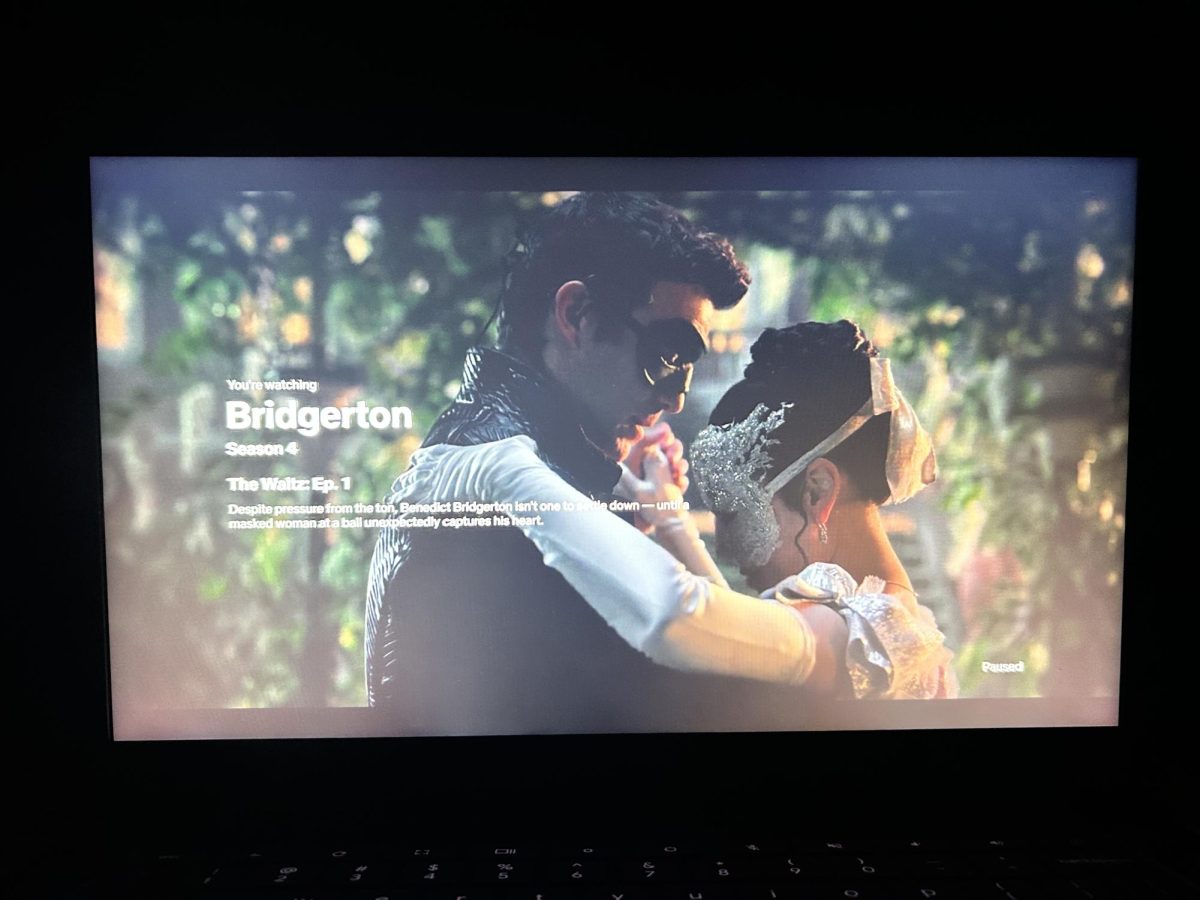
Dearest Gentle Reader… have you heard my voice before? Perhaps from Bridgerton? If you have, then you are not alone.
When Bridgerton premiered on Netflix on December 25, 2020, the world was in lockdown. Movie theaters were closed. Schools were remote. Days blurred together. Within weeks of its release, millions of viewers had binged the glittering Regency-era drama, escaping into ballrooms, orchestral pop covers, and slow-burn romances. According to Netflix, the first season reached over 80 million households in its first month, making it one of the platform’s biggest launches at the time.
Based on the bestselling novels by Julia Quinn, the series was created by Chris Van Dusen and produced by Shonda Rhimes as part of her landmark deal with Netflix. The show follows a wealthy and successful family, the Bridgertons, in each member of the family’s love stories, often paired with its fair share of candlelight libraries and corset ripping. Along with slow burn romances and enemies to lovers tropes, the show is set against the luscious backdrop of English countryside (or cottages in season 4) and a romanticized version of the eighteen-teens London.
But Bridgerton was not just another period drama. It reimagined Regency England with a deliberately diverse cast, placing actors of color in aristocratic roles traditionally portrayed as white.
Season Two star Simone Ashley emphasized the importance of this change saying: “Representation is important, especially for the younger generation. What we see is really powerful,” adding that the more diverse audiences see on screen, the more people can “connect with each other in the world.”
However, discussions around diversity remain complicated. A look at Rotten Tomatoes scores shows that seasons led by white actresses (seasons one and three) received higher audience ratings than seasons two and four, both led by women of color. Whether this difference reflects storytelling preferences or lingering bias among viewers is up for debate, however it highlights that conversations about race in the media are far from over.
And although many praise its diverse casting, others notice that the characters still have anglicized lives and rarely acknowledge anything but the traditional white culture of the era. Some hope that one of the characters wearing a saree inspired dress in season four signals a change to this sometimes shallow diversity. Many viewers also hope for a Latino lead in the future.
At the same time, Bridgerton has expanded representation beyond ethnicities. Recent seasons introduced LGBTQ+ storylines, including a bisexual arc for one Bridgerton sibling and a same-sex romance for another. Notably, these storylines and the racial diversity were not present in Quinn’s original novels. They were creative decisions made by the show’s writers and producers under Shondaland, signaling an effort to modernize the Regency world for contemporary audiences.
Beyond representation, Bridgerton helped redefine binge culture. Released all at once, its early seasons encouraged marathon viewing and fueled viral TikTok edits, costume recreations, and soundtrack trends. The show became part of Netflix’s identity as the home of addictive, guilty pleasure television. “I binged season one in two nights, it was too good to stop watching. The atmosphere, the storyline, the characters…it never disappoints,” said Ada Solis, ‘27. Teagan Irland, ‘27, added that she hasn’t seen the show yet but has seen edits and reactions on YouTube, and now she wants to watch it.
Bridgerton has become the talk of the town once again as its fourth season just premiered in two parts on January 29th and February 26th. The shift to premiering the season in two parts occurred with season three, and many fans have expressed frustration over the split release, arguing that it disrupted the immersive, bingeable experience that made the show famous. Despite this, Netflix has already renewed the series for a fifth season, proving that the appetite for romance in corsets is far from fading.
In a time of isolation, Bridgerton offered fantasy, glamour, and connection. Whether one watches it for the romance, the representation, or the drama whispered by Lady Whistledown, one thing is certain: society is still very much watching.