

I was in Whole Foods one day with my mom, and we were strolling by the meat section to see what could be on the dinner menu for the night. When I noticed something that I had never noticed before: there was a sell-by date, a week ahead of the day we went to the store. I looked around and I saw another, and another. So many pieces of meat that would be thrown away all around the same time, and then a realization struck me like a knife to the back. We all know at some level that we Americans waste a lot of food; it’s one of those things that we hear when we are little, but never fully think is a problem. When I asked a random selection of students here at BHS, six out of ten responded that it was a problem, especially here in Boulder, but still, there was a percentage that were unsure or didn’t know. We are lucky that there are many here who know that this is serious, but still, over an estimated 40% of us do not consider food waste as a major problem. Moreover, Boulder is one of the most environmentally conscious cities that I have seen, so what I am saying is that if we’re going to do something to tackle this problem, we need everyone’s help, not just the majority, but everyone.
Animals die for a noble cause, assuming that people are actually eating what they sacrificed themselves to give. In 2010, the USDA did a study on how much we waste. The amount was over 110 billion pounds of food wasted per year, which is over 40% of our actual food production.
And this is not the only problem; there are many environmental consequences as well. For starters, over 20% of the landfills that the U.S produces are the billions of pounds of food wasted, only a fifth of what’s actually eaten.
Another area that we dedicate a lot of resources towards, farming and ranching in particular, is land. The amount of land that we dedicated to this ¨Industry¨ is incredible. It’s over the size of California and New York, combined. That is a tremendous amount of land that we dedicate to a cause in which we waste over 40% of the yield. So now you see we don’t just waste food, we’re putting a major strain on the environment by using all this land, taking all this water, and polluting the sky to fuel it.
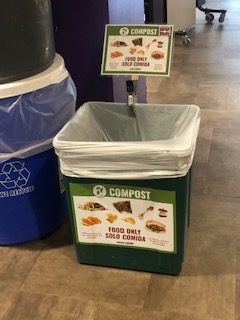
You might think this problem is far away and unrelated to Boulder, but it affects us here, too, even in our cafeteria. The Climate Resilience Organization Committee (C.R.O.C.) leads an initiative to encourage composting. When asked how this program addresses food waste, Arthur Perez, president of C.R.O.C., clarified, “This program is not supposed to stop food waste. Instead, we are trying to change where the food goes, so that instead of going into a landfill, the waste can be recycled and used for something else, like fertilizer.”
So what are you going to do? Are you going to forget everything I told you the second you stop reading, or are you going to take these words to heart and do something about this crisis we’re having? The purpose of this article isn’t to give people a bunch of boring facts, but to encourage them to actually do something, to start a chain of events that could potentially lead to a better future, to make a lasting impact on the world we live in. So next time you’re about to throw some food away, and you’re literally right next to the compost bin, try to be a bit more environmentally conscious and throw the food into the green bin. Even that small act can have a lasting impact on our world.
